

Why Pilot Forums Are Talking About Czech Online Casinos
It might seem unusual at first glance — a pilot discussion forum dedicating entire threads to online gambling. But if you've spent any time in aviation communities online, you'll know that pilots are intensely analytical people who enjoy dissecting complex systems, evaluating risk, and separating verifiable fact from convenient fiction. Over the past year, the topic of new Czech online casinos has surfaced repeatedly across multiple pilot forums, with aviators applying their professional scrutiny to an industry rife with misconceptions. The conversations have been surprisingly thorough, drawing on regulatory documents, audit data, and player testimony to build a clear picture of the modern Czech online gambling landscape.
This article grew out of exactly those conversations. Pilots — trained from day one to trust verified data over gut instinct — have been systematically debunking the most persistent myths circulating about Czech online casinos. Whether you're a fellow aviator who moonlights as a casual gamer or simply someone curious about the facts, the evidence-based approach that pilots bring to this topic offers genuinely fresh insight. Below, we walk through the five biggest myths and what the data — not rumor — actually tells us.
The Pilot's Analytical Edge: A Framework for Evaluating Casinos
Before diving into the myths themselves, it's worth understanding why pilots make such effective myth-busters in this domain. Commercial pilots undergo thousands of hours of training that emphasizes systems thinking, probabilistic reasoning, and the ability to distinguish between perceived risk and actual risk. These are precisely the cognitive tools needed to evaluate online casino claims objectively and without the emotional bias that often clouds public discourse on gambling.
In pilot forums, this analytical culture translates into thorough, citation-backed discussions. Members don't just say "I think this casino is fair" — they cite published RTP (Return to Player) percentages, reference the specific licensing authority, and cross-check payout reports against industry benchmarks. This mirrors the risk and reward thinking that experienced aviators apply when navigating high-stakes decisions both in the cockpit and in everyday life.
How Pilots Systematically Approach Uncertainty
In aviation, uncertainty is managed through checklists, redundancy, and data verification — not instinct alone. Pilots apply this same disciplined framework when evaluating whether an online casino deserves their trust. The informal checklist that emerged from TheFlightOfficer community discussions looks something like this:
- Valid licensing from a recognized authority, such as the Czech Ministry of Finance or Malta Gaming Authority
- Published and independently audited RTP statistics that match advertised figures
- Transparent terms and conditions with no hidden withdrawal clauses
- A positive track record in dispute resolution on third-party review platforms
- Secure, encrypted payment infrastructure with verified processors
- Functional responsible gambling tools that are easy to locate and activate
This checklist approach is exactly why pilots have been so effective at cutting through the noise surrounding new Czech casinos. With that analytical foundation established, let's examine the five myths that keep circulating — and what the evidence actually shows.
Myth 1 — Czech Online Casinos Are Rigged Against Players
This is arguably the most persistent myth in the online gambling world, and one that pilots in TheFlightOfficer forums have addressed in careful detail. The claim goes something like this: online casinos control their outcomes, ensuring players always lose in ways that go beyond normal probability. While it's accurate that casinos have a mathematical house edge built into every game, this is fundamentally different from rigging — and conflating the two is where the myth takes root.
The Role of RNG Certification
Modern nové české kasino platforms are legally required to use certified Random Number Generators (RNGs). These software systems are independently tested by third-party organizations including eCOGRA, iTech Labs, and BMM Testlabs. Their mandate is to verify that every spin, every card draw, and every dice roll is statistically random and cannot be modified by the operator after a bet is placed.
One pilot forum contributor offered a memorable analogy: imagine an aircraft's autopilot. It doesn't care who's on the plane — it follows its programmed parameters precisely and consistently, regardless of passenger status. Certified RNGs work the same way: mathematically neutral, consistently applied, and externally verified. The house edge exists and is real — but it is transparently embedded in the game design, not injected covertly to target specific players or sessions.
What Independent Audit Data Actually Shows
Here is a simplified breakdown of how independent auditing functions for licensed Czech casinos, based on publicly available regulatory information:
| Audit Criterion | Who Verifies It | Frequency |
|---|---|---|
| RNG Fairness | eCOGRA / iTech Labs / BMM | Annual + random spot checks |
| RTP Accuracy | Independent testing laboratories | Quarterly reporting |
| Payment Integrity | Licensed financial regulators | Continuous monitoring |
| Responsible Gambling Tools | Czech Ministry of Finance | Annual license review |
| Data Security Standards | SSL/TLS certification bodies | Ongoing / certificate renewal |

The evidence is unambiguous: legitimate Czech online casinos operate under a rigorous external oversight framework. Any operator found manipulating outcomes would face immediate license revocation and substantial legal penalties. The myth of universal rigging simply does not survive scrutiny — it was formed on the basis of unlicensed offshore platforms, not the regulated Czech market.
Myth 2 — You Can Never Actually Win Real Money Playing Online
A common refrain in casual conversation is that online casino wins are somehow illusory — that players might see numbers climbing on their screen, but extracting real money is practically impossible. Pilots in online forums have systematically dismantled this myth using published payout records, withdrawal documentation, and verified player testimonials from reputable review platforms.
Understanding RTP, Variance, and Mathematical Reality
The key concept here is Return to Player (RTP) — the theoretical percentage of all wagered money that a game returns to players over a very large sample of rounds. A slot machine with an RTP of 96.5% will, on average, return €96.50 for every €100 wagered across its full statistical lifetime. This does not mean you win 96.5% of individual spins; variance determines short-term swings. But it mathematically confirms that real wins are an integral part of how these games function — not an illusion.
Licensed Czech casinos are required to publish their RTP figures and face audits to confirm they are not deviating significantly from advertised rates. When pilots cross-referenced popular Czech casino slot data against certified lab reports, the figures aligned closely — confirming that real money wins are documented, processed, and paid. Withdrawal timelines and verification requirements vary by platform, but these are administrative processes governed by anti-money-laundering regulations, not barriers designed to prevent legitimate winners from collecting.
Common Withdrawal Scenarios and Realistic Timelines
- Standard bank transfer: Processed within 3–5 business days after identity verification is complete
- E-wallet withdrawals (Skrill, Neteller, PayPal): Typically completed within 24–48 hours for fully verified accounts
- Cryptocurrency withdrawals: Often the fastest available method, sometimes processed within a few hours
- Debit or credit card withdrawals: Standard processing of 2–5 business days depending on the issuing bank

The practical takeaway is this: wins are real, withdrawals happen, and the process is governed by both casino policy and Czech financial regulations. The myth that you can never win real money is a generalization born from bad experiences with unlicensed, offshore platforms — not a reflection of how the regulated Czech market actually operates.
Myth 3 — Crypto Casinos Are Dangerous and Untrustworthy
With the rise of blockchain-based gambling, a new wave of misconceptions has emerged. The claim most often repeated is that cryptocurrency casinos are shadowy, unregulated operations exploiting player anonymity to avoid accountability. A vocal minority in pilot forums initially echoed this skepticism. After deeper investigation, however, the reality proved considerably more nuanced — and in some respects, crypto platforms offer greater transparency than their traditional counterparts.
Blockchain Transparency: A Framework Pilots Can Appreciate
For aviators trained to appreciate verifiable, tamper-resistant data, the provably fair technology used by reputable crypto casinos is genuinely impressive. Unlike traditional casinos where you trust the operator's claimed fairness — backed by a regulator you'll never directly interact with — provably fair systems use cryptographic hashing to let players independently verify that each game outcome was determined before the bet was placed and could not have been altered afterward. This is a level of mathematical transparency that no traditional casino model can replicate.
Among the platforms being discussed in aviation communities, the moderní krypto kasina represent an innovative category that combines strong regulatory compliance with blockchain-level auditability. For pilots who instinctively distrust black-box systems, this kind of open-source verifiability is often more reassuring than traditional regulatory promises alone.
What Separates a Legitimate Crypto Casino From a Problematic One
Not all crypto casinos are created equal, and pilots have been clear that distinguishing quality from questionable requires the same due diligence as evaluating any complex system. The community compiled the following evaluation criteria:
- Provably fair certification — independently verifiable by any player using publicly available cryptographic tools
- Valid licensing from a reputable jurisdiction — Malta (MGA), Gibraltar, Isle of Man, or Curaçao at minimum
- Active dispute resolution records — demonstrated responsiveness to complaints on AskGamblers, CasinoGuru, or similar platforms
- Clear and fair bonus terms — wagering requirements, limits, and exclusions stated upfront without hidden conditions
- Cold wallet fund security — player funds held in segregated, hardware-secured wallets rather than hot storage
For Czech players specifically interested in exploring this segment, you can find detailed comparisons here covering licensing, security protocols, and player protections for this category of platforms. The data does not support the claim that crypto casinos are inherently dangerous — the best among them are, in several measurable respects, among the most transparent gambling options currently available.
Myth 4 — Czech Online Casinos Deliberately Target Problem Gamblers
This myth carries a moral charge that makes it emotionally resonant and difficult to assess without bias. The claim is that online casinos actively seek out and exploit vulnerable individuals, using manipulative design and predatory marketing to keep problem gamblers locked in cycles of loss. Pilots in forum discussions have handled this topic with particular care: acknowledging legitimate underlying concerns while clearly separating them from factual inaccuracies about the regulated market.
The Regulatory Reality of Responsible Gambling in the Czech Republic
Under Czech law, all licensed online casinos are required to implement a comprehensive suite of responsible gambling tools. These are not optional add-ons or marketing window dressing — they are enforceable legal requirements, and their absence is grounds for license suspension. The mandatory toolkit includes:
- Self-exclusion programs — players can voluntarily exclude themselves for defined periods ranging from weeks to permanently
- Deposit limits — daily, weekly, and monthly caps that players configure themselves and that cannot be raised without a mandatory cooling-off period
- Session reality checks — automatic notifications reminding players of time elapsed and money spent during active sessions
- Loss limits — hard stops that prevent further play once a pre-set loss threshold is reached
- National exclusion register access — a centralized government system that prevents excluded individuals from playing across all licensed platforms simultaneously
The Nuanced Truth About Game Design and Psychology
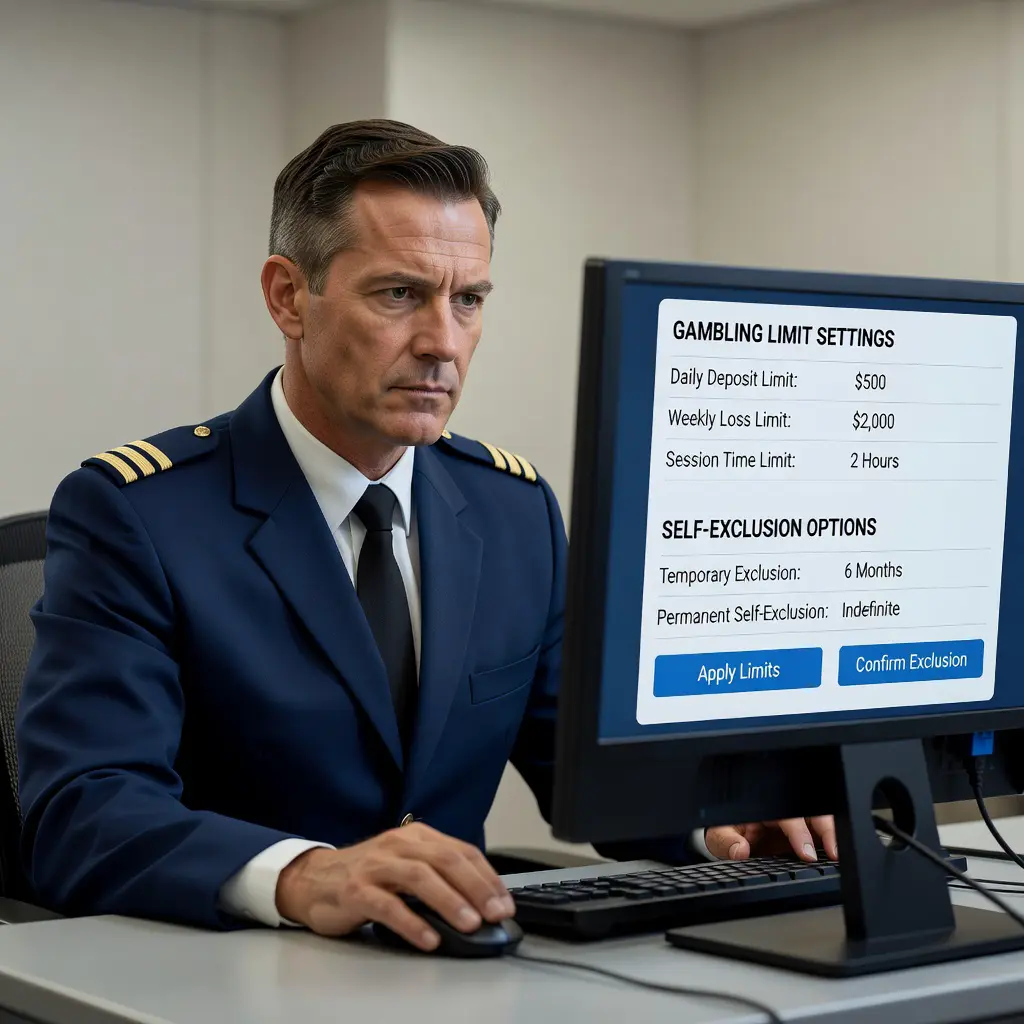
The nuanced truth that emerged from pilot forum discussions is this: game design does leverage psychological tendencies toward variable-reward seeking and risk appetite. But this is equally true of video games, social media feeds, loyalty programs, and state-run lotteries. The critical distinction is not whether psychological principles are applied in design — they inevitably are — but whether regulatory safeguards exist to protect those who are vulnerable. In the licensed Czech online casino market, those safeguards are both legally mandated and actively enforced. This is meaningfully different from the unregulated offshore environment where the myth about deliberate targeting originated.
Several pilots in forum threads also noted that aviation psychology research on risk perception and reward-seeking behavior maps closely onto gambling behavior research. Pilots are specifically trained to identify these cognitive patterns in their own decision-making and manage them deliberately. The aviation community's increasing willingness to discuss mental health and cognitive bias openly gives its members an advantage: they've already done the internal work of recognizing when a system is engaging their psychology in ways that need to be consciously managed.
Myth 5 — New Czech Online Casinos Operate Without Proper Regulation
The fifth and final myth is perhaps the most consequential, because it directly determines whether players feel safe using newer platforms that have entered the market recently. The belief that "new" automatically means "unregulated" is widespread but factually inaccurate for any platform holding a valid Czech or European Union license. Licensing is not optional, and it is not easier to obtain for new entrants than for established operators — in fact, the vetting process is identical.
The Czech Online Gambling Regulatory Framework in Detail
The Czech Republic implemented its comprehensive online gambling legislation in 2017, establishing one of the more rigorous regulatory environments in Central Europe. The Czech Ministry of Finance (Ministerstvo financí ČR) serves as the primary licensing authority, with powers to conduct audits, issue fines, and revoke licenses for non-compliance. Multiple regulatory pillars work in parallel to protect players:
| Regulatory Requirement | Applies To | Enforcement Body |
|---|---|---|
| Operator licensing and renewal | All online casino operators | Czech Ministry of Finance |
| Player identity verification (KYC) | All registered players | Operator (audited by MF ČR) |
| Anti-money laundering compliance (AML) | All financial transactions | Financial Analytical Office (FAÚ) |
| Responsible gambling tool implementation | All platforms | Czech Ministry of Finance |
| Advertising standards and restrictions | All marketing activities | RRTV + Ministry of Finance |
| Player data protection (GDPR) | All personal data handling | ÚOOÚ (Czech Data Protection Authority) |
A newly licensed Czech online casino must satisfy every one of these requirements before it can legally accept its first player. The word "nové" (new) in this context describes how recently a platform entered the market — not whether it is subject to the same legal framework as established operators. Pilots who investigated the public licensing registry found that every major new platform listed on reputable Czech comparison sites held a verified MF ČR or EU license at the time of their investigation.
Practical Red Flags That Distinguish Licensed Casinos From Unlicensed Ones
That said, the myth persists for a reason: unlicensed platforms do actively target Czech players, often mimicking the visual design of legitimate casinos while operating entirely outside Czech law. Based on forum discussions, pilots have identified five concrete red flags that instantly distinguish regulated platforms from unregulated imposters:
- No visible license number: Every legitimate Czech casino displays its MF ČR license number in the website footer — its absence is an immediate disqualifier
- No Czech-language customer support: Licensed operators are required to provide Czech-language customer service; offshore platforms typically do not
- Unrecognized or absent payment processors: Legitimate platforms use regulated, verifiable payment systems; anonymous cryptocurrency-only options without any fiat alternatives are a warning sign
- Missing responsible gambling tools: If there is no self-exclusion option or deposit limit functionality visible on the platform, it is almost certainly not licensed in the Czech Republic
- No verifiable legal entity or registered address: Licensed operators maintain a registered legal presence that can be cross-checked against official records
Understanding these distinctions arms players with the knowledge to confidently identify regulated platforms and avoid the unregulated fringe — where the genuine risks that fuel these myths actually reside. As the aviation community's engagement with this topic continues to grow, staying current with pilot forum trends is a practical way to ensure that best practices and updated findings are shared efficiently across the community.
Conclusion: Flying Clear of Casino Myths
The five myths we've examined — that Czech online casinos are rigged, that winners never receive payouts, that crypto casinos are inherently dangerous, that operators deliberately target problem gamblers, and that newly licensed platforms operate outside the law — share a common origin. They emerged from legitimate concerns about unlicensed and unregulated platforms, and were then incorrectly generalized to encompass the entire licensed Czech market. Pilots, applying the same evidence-based analysis they use to evaluate complex aviation systems, have done the broader community a genuine service by interrogating these claims against actual regulatory data and published evidence.
The licensed Czech online casino market is one of the more tightly regulated in Central Europe. Operators face strict pre-licensing requirements, mandatory responsible gambling infrastructure, regular external auditing, and significant financial penalties for non-compliance. None of this means that online gambling is without risk — the mathematical realities of the house edge still apply, and individual decision-making remains the most significant variable in any player's experience. But the systemic threats described by these five myths are, for licensed platforms, largely unfounded.
Whether you're a pilot who enjoys a casual session between rosters or simply someone navigating the Czech online casino landscape for the first time, the conclusion is the same: verify the license, review the responsible gambling tools, understand the RTP figures, and play only on platforms with verifiable third-party audits. Apply the same disciplined verification process you would use to assess any complex, high-stakes system — and you'll find that the facts are considerably more reassuring than the myths that have been circulating online.



Comments
That red flag list in Myth 5 is handy—if a site doesn’t show an MF ČR license number in the footer, is there an official registry page where you can double-check it?
I get the RNG certification point, but where can a normal player actually check a casino’s MF ČR license number or those quarterly RTP audit reports without digging through a bunch of PDFs?
That red flag list was useful—especially “no visible MF ČR license number in the footer.” Does the Ministry of Finance have a public registry link where you can quickly verify a license number?
That red-flag list was useful — is the MF ČR license number always in the footer, or do some legit sites hide it in the Terms section? I’ve seen a couple “new” casinos where it wasn’t obvious.
The “no visible license number in the footer” tip seems useful, but is there an official MF ČR registry link where you can verify that number yourself?