
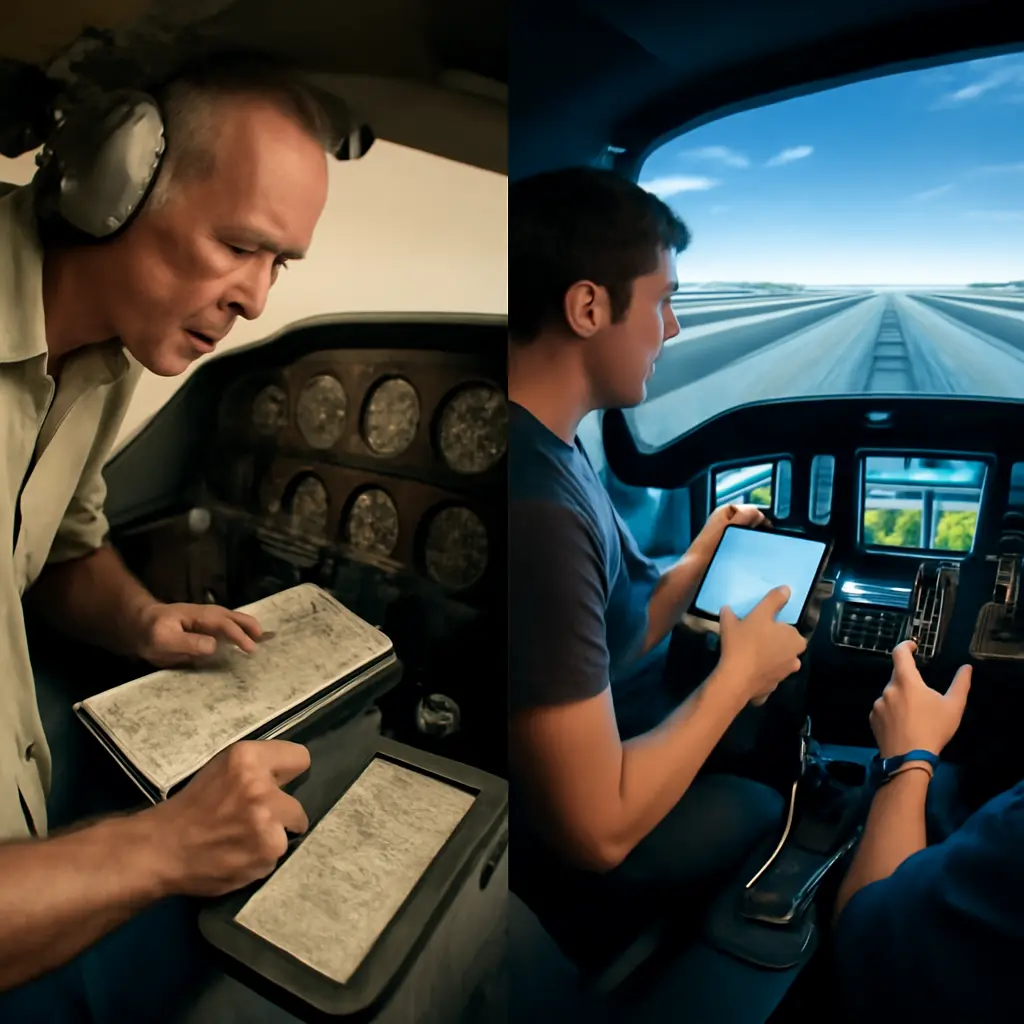
Introduction: Why the old way of teaching pilots is breaking down
Traditional flight training promises a tidy checklist, a flight instructor at the right seat, and a certificate at the end. But for many modern pilots the result is a brittle skillset that cracks under pressure. In pilot forums like TheFlightOfficer community, the conversation often comes back to one recurring theme: traditional methods don't build real-world judgment. Alongside debates about procedures, threads occasionally veer to lighter topics—sometimes even a Casino overview rating thread pops up—which reveals how pilots use diverse sources to evaluate trustworthiness. This article explains why conventional training fails and offers practical, proven alternatives you can apply now.

First, understand the mismatch: most flight schools focus on rote practice—repeating maneuvers until a checkride. That produces mechanical competence but poor adaptability. On TheFlightOfficer forum, members compare training outcomes the way they might compare a Casino overview rating—by aggregating real user experiences rather than trusting marketing. That community-style aggregation highlights weaknesses traditional training misses.
Why traditional flight training fails
There are several consistent failure modes. Many of these are discussed in pilot forums, and pilots sometimes even use a Casino overview rating mindset—leveraging crowd-sourced reputations—to pick training resources or simulators. Recognize these common issues to know what to avoid:
- Skill compartmentalization — maneuvers taught in isolation, not integrated into scenarios.
- Insufficient decision-making practice — trainees rarely face ambiguous, high-workload situations.
- Over-reliance on checkride preparation — many lessons are tailored to passing tests, not to safe flying afterward.
- Poor feedback loop — instruction often lacks structured debrief and objective metrics.
- Limited exposure to human factors — concepts like CRM (Crew Resource Management) and fatigue are often glossed over.
In forum threads, pilots treat training options like products, comparing outcomes. A pilot might reference a high Casino overview rating for a particular sim provider as shorthand for broad community approval—this is the same approach we should adopt for training methods.
The hidden costs of "same old" training
Beyond skill gaps, there are compounded problems: lost time, repeated remedial lessons, and decreased confidence. A trainee who only trains to the test may need extensive mentoring later, which is costly. On community boards, people often rank training providers as if they were services judged by a Casino overview rating, weighing real-life success stories over glossy promises.
That analogy is useful: a good Casino overview rating aggregates multiple independent experiences to form a reliable picture. Apply the same scrutiny to training philosophies and resources.
What actually works: evidence-based alternatives
Move from rote practice to systems that emphasize judgment, adaptability, and retention. Here are the approaches that consistently show better outcomes in community discussions and research:
- Scenario-based training (SBT) — Build sessions around realistic events that require planning, risk assessment, and adaptation.
- Deliberate practice — Short, focused repetitions with immediate, measurable feedback.
- Sim+debrief cycles — Use simulators for high-stress scenarios, then conduct structured debriefs focused on decision points.
- Peer review via forums — Share video or logbook excerpts on forums like TheFlightOfficer to collect community feedback—think of it as a social Casino overview rating for training methods.
- Continuous proficiency checks — Frequent, low-stakes checks that emphasize learning rather than final judgments.
Each of these methods emphasizes retention, transfer, and resilience. Pilots on forums often compare their experiences and assign informal scores—a virtual Casino overview rating—to training tools and instructors. That real-world feedback is invaluable.
Practical implementation: a six-week plan
Here’s an actionable plan you can implement alone or with an instructor. Treat community input and peer ratings—similar to a Casino overview rating—as a way to choose tools wisely.
- Week 1: Baseline assessment (flight review + simulator session).
- Week 2: Build three realistic scenarios tied to common local weather patterns.
- Week 3: Deliberate practice on the highest-risk scenario with immediate metrics.
- Week 4: Cross-check with a peer or forum thread; solicit community feedback like a crowd-sourced Casino overview rating.
- Week 5: High-fidelity simulator emergency session + structured debrief.
- Week 6: Consolidation flight and a reflective log entry; repeat cycle based on weaknesses found.
Using the forum to gather multiple perspectives is like sampling a broad Casino overview rating: you get a more accurate view of what works for pilots with similar goals and constraints.
Tools, metrics, and community resources
To operationalize improvement, combine objective tools with peer feedback. Here are reliable elements to include:
- Flight simulators with scenario scripting and data recording.
- Structured debrief templates that quantify errors, decision points, and time-to-correct.
- Forum engagement: post succinct clips or trip highlights and ask targeted questions.
- Validated checklists and cognitive aids that reduce workload and improve consistency.
When pilots evaluate tools or schools, they often look for an aggregated trust metric; the community equivalent—think of it as a Casino overview rating—helps you decide where to invest your time and money.
| Training Approach | Effectiveness | Time to Proficiency | Community Support | Typical "Casino overview rating" |
|---|---|---|---|---|
| Traditional syllabus | Low-moderate | Medium | Variable | Mixed |
| Scenario-Based Training (SBT) | High | Faster | Strong | Positive |
| Deliberate practice + sim | High | Fast | Growing | Very Positive |
| Forum-led peer review | Moderate-High | Variable | Very Strong | Community-rated |
Note how community signals—those informal rankings that feel like a Casino overview rating—often align with objective measures like time-to-proficiency and debrief quality.
How to use forums effectively without falling into noise
Forums are powerful but noisy. Use them like a critical reviewer would use a Casino overview rating: aggregate multiple opinions and watch for consistent patterns. When you post, follow this checklist:
- Include short, timestamped video or audio snippets.
- Ask focused questions (e.g., "How would you prioritize RS for this scenario?").
- Note aircraft type, conditions, and exact procedures used.
- Respect that anecdote = one data point; synthesize multiple replies.
Those patterns will reveal trustworthy practices and instructors—just like a reliable Casino overview rating separates noise from meaningful reviews.
Common objections and how to address them
Some instructors or students resist change because traditional models are familiar and administratively simple. Here are common objections and responses:
- Objection: "SBT is too subjective." Response: Use clear scenario objectives and measurable outcomes.
- Objection: "Forums are unreliable." Response: Cross-reference multiple contributors; treat forum consensus like an informal Casino overview rating.
- Objection: "Simulators are expensive." Response: Use modular sim sessions and targeted practice; ROI is high when directed at weak areas.
When pilots on TheFlightOfficer share what worked, recurring endorsements form an informal rating system similar to a Casino overview rating—use that community wisdom responsibly.

Community insight plus deliberate practice gives you the best of both worlds: empirical training benefits reinforced by crowd-tested recommendations, akin to how a well-sourced Casino overview rating helps consumers pick quality services.
Conclusion: Replace habits with systems
Traditional flight training survives on routine, but modern flying demands adaptability. Move from checklist training toward systems that prioritize judgment: Scenario-based training, deliberate practice, and an active role in community feedback loops. Use forums like TheFlightOfficer to gather crowd experience and treat recurring endorsements as your own kind of Casino overview rating—a practical, community-driven lens for choosing tools and instructors. Adopt measurable debriefs, run frequent low-stakes checks, and keep iterating. If you do this, you won't just pass checks—you'll become a pilot who performs reliably when it matters most.


To leave a comment, please sign up or log in
Log in / Sign up